Introduction: People Have Real Experiences These Days
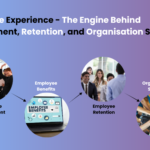
Gone are the times when a good salary and choice perks were enough to keep an employee engaged and loyal. Employee experience, conversely, has become toward production and engagement and, most important, retention in this ever-evolving work ecosystem.
It is the whole experience an employee has in interacting with the organization: from applying for a job till the day they take their leave. It is shaped by culture, leadership, tools, communication, well-being, and more.
Organizations that make EX a priority set up workplaces where employees can actually thrive, rather than just put in their time at work.
1. What Is Exactly the Employee Experience?
Think of EX as a parallel of customer experience for the employee. Some main aspects include:
- Physical environment: Office location, setup for remote working, and workplace design
- Digital experience: Tools, platforms, how easy it is to access, and user experience
- Cultural environment: Inclusion, leadership, values, and communication
- Emotional experience: Feeling valued, heard, supported, and empowered
Good employee experience serves to make people more productive and encourages their growth, thereby committing them for the long term. Poor employee experience, however, forces them out.
2. Why Retention Happens to Depend on Employee Experience?
Some facts point toward employee-retention-related matters:
- Gallup found that teams who are highly engaged show 59% less turnover.
- Strong EX companies get 2.5 times the revenue growth and are 21% more profitable (IBM/Globoforce).
- According to PwC, 86% of employees say they would quit a job for a better experience.
- It’s not about ping pong tables or complementary snacks — rather, it’s about **trust, connection, opportunity, and well-being.
3. Primary Supports for a Strong Employee Experience
A. Purpose and Belonging
People want to work for organizations where they feel connected to the mission and seen as individuals.
- Articulate clearly how the work of each role supports the broader mission.
- Honour differences and build inclusive cultures where all members belong.
- Encourage community by fostering ERGs and social traditions.
B. Growth and Development
Any employee that stagnates becomes a disengaged one.
- Personalized learning paths should be offered via digital L&D platforms.
- Offer coaching, mentoring, and career mobility.
- Promote from within to nurture the prospect of advancement.
C. Manager Quality & Leadership
Managers greatly affect the day-to-day experience.
- Train managers to exercise empathy in leadership, give feedback, and support well-being.
- Encourage regular 1:1s beyond task check-ins.
- Reward leadership focused on people rather than output.
D. Technology and Tools
The tools your employees use every day can kill or boost productivity and morale.
- Make sure to audit the digital experience — clunky systems mean friction and frustration.
- Invest in user-friendly, integrated platforms.
- Keep flexible working enabled by solid remote tech and access.
E. Recognition and Feedback
The entire world wants to be seen, appreciated, and acknowledged.
- Set up instant recognition programs (Kudos, Bonusly).
- Stimulate peer recognition and team-level shoutouts.
- Establish feedback loops — ask, listen, and act.
F. Flexibility and Wellbeing
The workforce of today requires flexibility and consideration of mental health.
- Allow hybrid or remote working under actual roles and preferences.
- Give mental health days, mental health programs, and wellness programs.
- Normalise talks surrounding burnout and workload.
4. Listening: The Foundation of Employee Experience
If you don’t understand it, you cannot improve it.
- Regularly run anonymous employee pulse surveys.
- Measure loyalty with eNPS (Employee Net Promoter Score).
- Actively encourage and act on open feedback.
- Create continuous listening loops instead of just annual feedback surveys.
Pro tip: Close the loop. Let employees know what’s going to change because of their feedback.
5. Measuring and Improving EX Over Time
Employee experience is not a project that can be done in one shot. It requires ongoing measurement and iteration. The important metrics for EX include:
- Engagement scores
- Turnover and retention rates
- Time to productivity (for new hires)
- Internal mobility and promotion rates
- Employee well-being metrics
Mix qualitative data (focus groups or interviews) with quantitative data to build a full picture — and let employees co-create the solutions on this.
6. Case Examples: Companies Excelling at EX
Salesforce:-
Widely known for its unique Ohana culture, Salesforce puts tremendous importance on employee wellness, belonging, and leadership development.
Airbnb:-
Airbnb restructured its HR function to become an “Employee Experience” team, encompassing HR, IT, and workplace design to provide end-to-end employee support.
LinkedIn:-
Internal career coaching, extensive learning and development programs, and values-based leadership training all exist here, and they are tied to culture and purpose.
They do not merely feature perks — they architect experiences that empower, support, and inspire.
7. The Cost Of Getting It Wrong
Ignoring EX leads to:
- High churn costs
- Low morale or presenteeism
- Reputation damage on employer review sites
- Hardships in attracting top-notch talent
In a transparent market, companies can no longer fake it. Disengaged employees are vocal, and potential candidates are listening.
Conclusion: Experience Is Everything
In a world with every skilled worker having a thousand choices, employee experience stands as the strongest retention strategy.
It’s not about flashiness; it’s about human-centeredness. Listening, realising personalisation, supporting, and empowering workers at every stage.
Companies that invest in EX do not just limit turnover but create cultures where people want to be, grow, and give their best.
Because having said that, great employee experience leads to great business outcomes.