adorableit.com

Categories
HR Outsourcing Services

Predictive Analytics The Power behind Precise HR Decision Making

Predictive Analytics The Power behind Precise HR Decision Making

In business, the human factor is the main thing and data is the second thing. Human Resources have progressed a lot and are no longer limited to hiring and paying. At present, HR occupies a very significant position between technology and human talent where predictive analytics is the guiding tool that incredibly leads to smarter, sharper, and more strategic decisions.

The period when HR was dependent only on instinct or experience to make important decisions has passed. Currently, with sophisticated data tools, HR experts are able to detect patterns, predict results and choose the options that are too supported by strong evidence. What do we get? Not just informed choices but accurate, always.

The Rise of Predictive Analytics in HR

Think about predicting, for example, employee turnover before it occurs, recognizing good candidates before their interview, or anticipating workplaces shortages before they affect productivity. This is indeed the guarantee of predictive analytics the change of raw data into foresight that can be acted upon.

Basically, predictive analytics does the forecasting of future trends through historical and real-time data. In the case of HR it involves the analysis of thousands of data points and the use of metrics from recruitment and engagement up to training, effectiveness, and performance ratings, thus making it possible to discover the insights that lead to decision-making.

How Predictive Analytics Transforms HR Decisions

1. Recruitment: Hiring the Right Fit, Every Time: Recruitment has always been a combination of science and art. However, predictive analytics makes it a very accurate craft. By examining the past of the applicants, their skills, and their behaviour, organizations can forecast which of the candidates are likely to be successful in the long run and will remain with the company. This not only leads to a reduction of turnover, hiring costs, and training time but also the creation of stronger, more aligned teams.

2. Retention: Predicting Attrition before It Happens: Employee turnover is a big financial burden for companies, costing them millions of dollars. Predictive models can give an indication of trouble spots which could come up in the followings ways declining engagement scores, absenteeism, workload patterns, or sudden performance dips. Then the HR department can step in, make the adjustments, and prevent valuable talent from leaving the company by ensuring that employees are satisfied.

3. Performance Management: Data-Driven Growth: The period of conducting yearly appraisals has passed. With the help of predictive analytics, the performance of employees can be constantly tracked, thus giving the managers an insight into the factors that lead to productivity and make the employees feel good. Based on these insights, the HR department can create personalized learning and development programs and growth plans that will be most effective.

4. Learning & Development: Future-Proofing Skills: Predictive analytics allows HR departments to anticipate future skill shortages by analysing both the external and internal performance data and the industry trends. This understanding allows the companies to offer training to the staff before they even need it, making sure that the employees are future-ready and not future-anxious.

5. Diversity & Inclusion: Decisions Free from Prejudice: In promotions and hiring a lot of times bias is not recognized.  Predictive analytics can sift through the data in an unbiased way by focusing on metrics grounded in merit rather than assumptions, thus assuring equality and fairness.  It creates a workplace that is inclusive to all, in which decisions are made based on facts and not emotions.

The Precision of Predictive HR: From Gut Feeling to Data Confidence

The human judgment has been the principal factor in the HR decisions for a long time, and even though it is a valuable factor, it is not always reliable. The implementation of predictive analytics has introduced a new dimension of accuracy. It’s like changing from a traditional map to GPS navigation. You still have an idea of the destination, but along with that, you also have the best way, possible hiccups on the way, and the time of arrival. HR is now using technology in a way that it is not reacting to problems but is in fact preventing them.

The data-driven HR teams are in a position to respond to the most important questions such as:

  • Who are the employees that stand the greatest chance of burning out?
  • Which factors keep the high performers for a longer time?
  • What sector of training can generate the best returns?

The provision of these answers converts strategy into science and intuition into insight.

Real-World Impact: Using predictive HR analytics to reshape their workforce is already the reality of major firms like IBM, Deloitte, and Infosys. For IBM, it was through the predictive model that identified the at-risk employees early that the firm ended up cutting employee attrition by more than 30%.

A wave is sweeping over to mid-sized companies, too; they are applying similar technologies and tools like SAP Success Factors, Oracle HCM, and Workday for data analytics to be part of daily HR decisions. The upside? Better and more informed hiring, increased employee happiness, and improved business results.

The Human Touch behind the Numbers: Sooner or later, HR will be all about the people, no matter the number of algorithms and dashboards used. Predictive analysis is not a substitute for empathy it is a process of refinement. HR practitioners can discern the data and let their efforts focus solely on those areas that matter the most: human connections, well-being, and growth.

If there are analytics and empathy, HR will not just be a department but a strategic powerhouse that influences the future of work.

Final Thoughts: Predictive analytics is no longer merely changing the functioning of the HR department, but it is completely re-establishing it. HR professionals, when every decision is supported by data, will be empowered to operate with complete trust, accuracy, and vision.

The upcoming era of HR will be ruled by those, who will be able to perfectly combine human intuition with digital intelligence. As soon as the right proportion is reached, the process of making a decision will not just rely on facts and figures it will get motivated.

Moreover, one fact in the contemporary workplace is undeniably obvious: Predictive analytics always tells HR when to decide and how.

Categories
HR Outsourcing Services

Employee Well Being The Heartbeat Behind Strong Mental Health Initiatives

The Heartbeat behind Strong Mental Health Initiatives
it’s the people who have fun working in a company that make such an organization a success and not only the profits or performance that the organization gets. Employee well-being has come into being as the backbone of modern business strategy rather than a mere corporate buzzword.

Mental health is now seen by companies as a factor that is interlinked with productivity, even fuelling it. Through a healthy mind, one gets to be an employee full of energy, good cooperation, and even better results. The investment in well-being is an example of organizations providing direct support to their workers as well as their own future security.

The Shift from Wellness to Well-Being

Workplaces for many years were mainly concerned with health in the form of physical activities like yoga, gym, or providing non-fatty snacks at the counters. These are all good, but true employee welfare is a lot more to it. It is the provision of different kinds of balances, such as emotional, mental, and psychological, for every worker.

The holistic approach looks to fitness to the extent of feeling the employees the way they think about their work, the environment, and themselves. Well-being is not about stopping diseases; it is about providing the necessary conditions for people to flourish.

Why Employee Well-Being and Mental Health Are Essential Partners

Theoretically, a workplace filled with inspired, assured, and stable individuals comes to mind. Stress is less, conflicts are reduced, and there is more cooperation. This is what occurs when mental health and well-being intersect.

If firms make it a point to fully support mental health, the employees will be beneficiaries of:

  • Decreased stress levels
  • Increased clarity and creativity
  • More contentment with their jobs
  • Better relationships and trust among co-workers

In brief, well-being is the ground of the pyramid, and mental health is the apex that rises high on it.

In what ways Employee Well-Being bolsters Mental Health programs

1. Establishing a Norm of Transparency: Mental health is very much alive in environments of open, non-judgmental, and understanding discussions. Leaders who are frank about stress, burnout, or work-life balance not only support employee mental health but also build a community where the workers feel their presence and idea are important.

2. Disburse Emotional Support Machinery: EAPs, therapy sessions, and peer-support groups are available for employees to resort to whenever they feel like they need help. These services are the ones that create culture that is built on caring making well-being a matter of shared responsibility.

3. Work-Life Balance Promotion: Employee burnout is lessened and their happy faces are more on company time when flexible working hours, telecommuting, and fair deadlines are offered. The firms that emphasize boundaries create an environment for the workers which are healthier and more sustainable for the whole company.

4. Empathy-Based Leadership Training for Managers: The managers are the ones who mainly influence the organizational mental health. If they are trained to spot the first signs of stress and to have a kind approach in their dialogues, the staff will feel supported not criticized.

5. Support in Mistakes and Acknowledgement of Success: Health is not only about having a relaxing time; it is also about having a feeling of purpose. Recognition of achievements, support for learning, and giving promotion opportunities uplift the self-image and great mental attitude.

Real-World Examples of Employee Well-Being Success

Businesses all over the planet are confirming that a well-being-centric approach is a lucrative one.

Google devotes a lot of money to mental wellness programs, meditation areas, and resilience training which in turn leads to employees who are more satisfied and imaginative.
The Indian outsourcing giants TCS and Infosys have gone one step further to their employees’ mental health by introducing emotional wellness platforms and virtual counselling.

Microsoft’s policy gives employees the opportunity to work from home and take “wellness days” to recuperate mentally regularly. Not only do these firms provide the wellness activities, but they also practice them as part of their daily regulations.

The Business Case for Mental Health: It’s not only humanity; it is also a business opportunity. Different studies have concluded that for every ₹1 put into mental health programs, ₹4 would be the return for the company by way of productivity, engagement, and retention.

The employees feeling supported in their minds take less sick leaves, communicate more effectively, and stay longer. To sum up, well-being is the main driver of performance emotional as well as financial.

Building a Future Where Well-Being Comes First: The future office will not only be rated on profit margins but also on the scale of happiness, resilience, and balance.

Mental health investments in today’s organizations will result in stronger, more loyal, and burning-out-ready workforces that can face challenges without stress. A firm that places a high value on well-being not only communicates to its employees: You matter, through actions, but also words. And when people are aware that they are valued, they will put in their best effort not because they are obliged, but because it is their desire.

Final Thoughts: No longer something to be handled in a parallel way, employee well-being becomes the core of contemporary HR strategy. It is the factor that ensures healthy thinking, strong connection between teams, and the flourishing of enterprises.

Where there are genuine care, flexible policies, and empathetic leadership, mental health initiatives of the companies will get strengthened, and they will not only create good workers but also a bright future

Ultimately, well-being is not about just being fine  it is about being inspired, supported, and strong.

Categories
HR Outsourcing Services

The Engine Behind Engagement, Retention, and Organization Success

Introduction: People Have Real Experiences These Days

Gone are the times when a good salary and choice perks were enough to keep an employee engaged and loyal. Employee experience, conversely, has become toward production and engagement and, most important, retention in this ever-evolving work ecosystem.

It is the whole experience an employee has in interacting with the organization: from applying for a job till the day they take their leave. It is shaped by culture, leadership, tools, communication, well-being, and more.

Organizations that make EX a priority set up workplaces where employees can actually thrive, rather than just put in their time at work.

1. What Is Exactly the Employee Experience?

Think of EX as a parallel of customer experience for the employee. Some main aspects include:

  • Physical environment: Office location, setup for remote working, and workplace design
  • Digital experience: Tools, platforms, how easy it is to access, and user experience
  • Cultural environment: Inclusion, leadership, values, and communication
  • Emotional experience: Feeling valued, heard, supported, and empowered

Good employee experience serves to make people more productive and encourages their growth, thereby committing them for the long term. Poor employee experience, however, forces them out.

2. Why Retention Happens to Depend on Employee Experience?

Some facts point toward employee-retention-related matters:

  • Gallup found that teams who are highly engaged show 59% less turnover.
  • Strong EX companies get 2.5 times the revenue growth and are 21% more profitable (IBM/Globoforce).
  • According to PwC, 86% of employees say they would quit a job for a better experience.
  • It’s not about ping pong tables or complementary snacks — rather, it’s about **trust, connection, opportunity, and well-being.

3. Primary Supports for a Strong Employee Experience

A. Purpose and Belonging

People want to work for organizations where they feel connected to the mission and seen as individuals.

  • Articulate clearly how the work of each role supports the broader mission.
  • Honour differences and build inclusive cultures where all members belong.
  • Encourage community by fostering ERGs and social traditions.

B. Growth and Development

Any employee that stagnates becomes a disengaged one.

  • Personalized learning paths should be offered via digital L&D platforms.
  • Offer coaching, mentoring, and career mobility.
  • Promote from within to nurture the prospect of advancement.

C. Manager Quality & Leadership

Managers greatly affect the day-to-day experience.

  • Train managers to exercise empathy in leadership, give feedback, and support well-being.
  • Encourage regular 1:1s beyond task check-ins.
  • Reward leadership focused on people rather than output.

D. Technology and Tools

The tools your employees use every day can kill or boost productivity and morale.

  • Make sure to audit the digital experience — clunky systems mean friction and frustration.
  • Invest in user-friendly, integrated platforms.
  • Keep flexible working enabled by solid remote tech and access.

E. Recognition and Feedback

The entire world wants to be seen, appreciated, and acknowledged.

  • Set up instant recognition programs (Kudos, Bonusly).
  • Stimulate peer recognition and team-level shoutouts.
  • Establish feedback loops — ask, listen, and act.

F. Flexibility and Wellbeing

The workforce of today requires flexibility and consideration of mental health.

  • Allow hybrid or remote working under actual roles and preferences.
  • Give mental health days, mental health programs, and wellness programs.
  • Normalise talks surrounding burnout and workload.

4. Listening: The Foundation of Employee Experience

If you don’t understand it, you cannot improve it.

  • Regularly run anonymous employee pulse surveys.
  • Measure loyalty with eNPS (Employee Net Promoter Score).
  • Actively encourage and act on open feedback.
  • Create continuous listening loops instead of just annual feedback surveys.

Pro tip: Close the loop. Let employees know what’s going to change because of their feedback.

5. Measuring and Improving EX Over Time

Employee experience is not a project that can be done in one shot. It requires ongoing measurement and iteration. The important metrics for EX include:

  • Engagement scores
  • Turnover and retention rates
  • Time to productivity (for new hires)
  • Internal mobility and promotion rates
  • Employee well-being metrics

Mix qualitative data (focus groups or interviews) with quantitative data to build a full picture — and let employees co-create the solutions on this.

6. Case Examples: Companies Excelling at EX

Salesforce:-

Widely known for its unique Ohana culture, Salesforce puts tremendous importance on employee wellness, belonging, and leadership development.

Airbnb:-

Airbnb restructured its HR function to become an “Employee Experience” team, encompassing HR, IT, and workplace design to provide end-to-end employee support.

LinkedIn:-

Internal career coaching, extensive learning and development programs, and values-based leadership training all exist here, and they are tied to culture and purpose.

They do not merely feature perks — they architect experiences that empower, support, and inspire.

7. The Cost Of Getting It Wrong

Ignoring EX leads to:

  • High churn costs
  • Low morale or presenteeism
  • Reputation damage on employer review sites
  • Hardships in attracting top-notch talent

In a transparent market, companies can no longer fake it. Disengaged employees are vocal, and potential candidates are listening.

Conclusion: Experience Is Everything

In a world with every skilled worker having a thousand choices, employee experience stands as the strongest retention strategy.

It’s not about flashiness; it’s about human-centeredness. Listening, realising personalisation, supporting, and empowering workers at every stage.

Companies that invest in EX do not just limit turnover but create cultures where people want to be, grow, and give their best.

Because having said that, great employee experience leads to great business outcomes.


Categories
HR Outsourcing Services

Continuous learning develops future ready employees effectively always

Continuous Learning: The Secret to Developing Future-Ready Employees

This is one scenario: companies will invest in their top talent today, but five years later, the same employees are found adrift in the flux of emerging technologies, newer processes, and evolving customer expectations. Put simply, nowadays, skills expire faster than a lawsuit against a smartphone.

So endless learning simply emerges as a matter of survival.

Companies are embracing a culture of continuous development, and those training people for the current set of problems and preparing those same people for the unknown future problems-to-be.

Why Continuous Learning Matters in the Modern Workplace

The business landscape is changing fast. Let me just highlight a few obvious examples

  • AI is automating anything routine.
  • Remote work is increasing collaboration.
  • Customer expectations change overnight.

If employees stop-learning, they stop-growing. And if employees stop-growing, companies stop-innovating.

Hence, continuous learning is the only way to develop future-ready employees who can adapt, innovate, and lead through anything that comes their way.

The Core Benefits of Continuous Learning

1. Adaptability in a Disruptive World

Jobs today may be gone by tomorrow. Yet, those who continuously learn profit from that learning: One very much Action-Tested term for the reskilling of its professionals has become very resourceful in their work, as well as entrepreneurial to establish new roles, for example, where needed.

2. Boost in Productivity & Confidence

Ingestion of information keeps employees up to date, so they can work on their feet and deal with problems quickly.

3. Retainment of Top Talent

They want opportunities to grow, not just to be paid. Companies investing in training programs become the preferred choice of professionals with ambition.

4. The Innovating Factor

Continuous learning nurtures creativity. The new ideas introduced to employees give them fresh perspectives with which they can drive innovation.

How Continuous Learning Creates Future-Ready Employees

1. Skill Reinvention

The employees learn hard skills of the kind AI, data analytics, or cybersecurity, along with soft skills needed for leadership, communication, and empathy. Hence, these people are considered to be not only technically competent but emotionally intelligent leaders.

2. Lifelong Learning Mindset

When learning becomes a part of the workplace’s DNA, the workers stop waiting for training programs; instead, they go ahead and self-learn, experiment, and evolve.

3. Resilience to Change

The future-ready employees actually are not afraid of change. They take disruption as an opportunity to evolve rather than a threat.

4. Leadership Development

The continuous learning experience provides the pathway for employees to become leaders through the acquisition of strategic thinking, decision-making, and adaptability.

Effective Ways to Build Continuous Learning in Organizations

  1. Microlearning Platforms → Very small lessons are eaten up by employees daily.
  2. Mentorship Programs → A learning path from senior leadership converges faster on growth.
  3. Workshops & Upskilling Bootcamps → Focused training on the emerging workforce plans.
  4. E-Learning & LMS (Learning Management Systems) → Flexible self-paced courses.
  5. Cross-functional Projects → Employees learn outside their domain through collaboration.

Real-World Examples

Dissecting examples from organizations such as Google or Infosys shows that they simply do not hire smart people, but create a full ecosystem of a continuous learning culture. Online courses, innovation labs, and many other interventions keep challenging their employees to learn, unlearn, and relearn.

Hence, they can sustain at the forefront of innovation and adaptability.

 Learning is the future

The workforce of tomorrow will not just be composed of those with degrees or the experienced ones. They are the ones who:

  • Never stop learning
  • Are ever-so-curious
  • Are able to confidently accept new skills

For organizations, this boils down to: If you want your workforce to always be future-ready, then continuous learning has to be built on today.

Final Thoughts

The art of continuous learning doesn’t survive and breath alone as a training methodology; it’s a way of thinking, a culture, and an advantage.

It turns employees into agile thinkers, innovators, and resilient leaders-the kind of talent that the future calls for.

In short: Continuous learning builds employees who don’t just keep up with the future… they create it.

Categories
App Development

How Can a Mobile App Help Your Business Grow?

Why Every Business Requires a Mobile App Today

In today’s digital world, smartphones are part of everyday life. People execute their daily activities through mobile applications, ranging from shopping, banking, healthcare, and entertainment.

If your business is still relying on just a website and traditional methods, maybe that is your opportunity slipping away.

Having a business would mean it is meant for an app. That is going to make it thrive in the future because at AdorableIT Services, a leading mobile application development company in India, we have helped many businesses grow faster with apps designed around their goals. Here are some reasons why a mobile app is no longer an option but a smart business decision.

1. Customers are favoring apps over websites.

People spend more time on their phones than on a desktop, and then most of their time is spent using apps. Whether it’s food ordering, booking rides, or shopping, users find apps faster and more convenient. Having a responsive website is good, but an app offers more benefits; it offers quicker time-to-access, offline access, and customized experiences. Businesses with apps can claim more customer loyalty and engagement.

2. Build Stronger Brand Visibility

Every time your app icon is seen on the screen of a phone, the brand becomes familiar to a person. This constant visibility becomes a matter of trust, and eventually, the business is kept in someone`s mind. With AdorableIT Services, we develop apps that speak for your brand identity and goals. Interspersed with push notifications, loyalty programs, and offers, these aspects create more brand recall and customer retention.

3. Make Customer Service Easier

Fast and smooth customer service is a key to success. With an app, you could offer chat, FAQs, and real-time updates straight to customers as they need them. Apps also reduce the cost of support and increase response time for businesses with a large customer base. Through chatbots, customer self-service can further empower your app to serve customers 24/7.

4. Get Insights With Real-Time Data

Mobile apps give essential data regarding customer behavior while browsing to purchases or frequency of app usage. AdorableIT Services develops apps with analytics dashboards built in. Insights derived from these dashboards make you understand your audience better, market more effectively, and become informed for your business decisions.

5. Increase Sales and Revenue

A mobile app may give a business several methods to increase revenue. In-app purchase, in-app subscription, and ad-revenue capabilities are some of them. It is claimed by various reports that businesses with their own apps end up selling more and converting more than those relying on websites. Being a trusted Android and iOS app development company, AdorableIT Services builds apps that are fast and easy to use and are well optimized to increase revenue.

6. Compete Ahead

In a competitive market, a mobile app distinguishes your business. So many small to medium businesses still hesitate; those that do adopt apps end up growing faster and retaining their customers better. Having an app tells that your business is modern, oriented toward its customers, and poised for the future.

7. Reach More Customers

An application listed on the Google Play Store or Apple App Store may reach millions of potential users. With proper app marketing, your business will be able to reach out to customers who would not find you otherwise. At AdorableIT Services, we build apps but take it further to ensure that they become visible to the target audience, easy to find, and alluring.

8. Reinforce Internal Operations

Not just consumer-facing applications, the apps can improve the internal functioning of your business. They help schedule work and organize collaboration, thus saving time and money. We assist you in building customized applications tailored to your specific needs: apps for your customers or solutions for your employees.

Why Choose AdorableIT Services?

Deep knowledge of providing services to Indian companies, AdorableIT is a trustworthy mobile app creation firm.

We have professional developers, designers, and planners who make high-quality iOS and Android applications according to your instructions. We support you completely, from ideation to launch and post-launch maintenance.

We provide innovations, user experiences, and success for clients.

Declarative

In this digital age, everything is digital; hence, the importance of apps lies in business promotion. Apps are a better way for businesses to reach customers, supply beneficial information, increase sales, and give you a leg up over your competitors.

If you want to scale your business, then the right time for investing in a customized mobile app is none other than today.

AdorableIT Services pushes your thoughts into a flexible app that yields value.

Searching for a name you can rely on in app development? Contact AdorableIT Services today. Be it for an Android, iOS, or some cross-platform creation, we are ready to infuse life into your project.

Categories
App Development

What Delivery Apps Do From Order to Doorstep?

What Delivery Apps Do From Order to Doorstep?

Delivery apps are now an essential part of everyday life. Food, groceries, or medicines-anything goes really. Just tap a button, and you have a pack of delicious food or whatever else at your doorstep. But did you ever think about what happens backstage after an order is made?

Come with me on the trip — from order to arrival at the doorstep.

1. Order Placement

It all begins with a customer looking through a delivery app, selecting items, and then checking out. Behind the easy–some would say too easy–click of a “Place Order” button lies a very robust instant processing system responsible for:

  • Instantly processing the customer’s order details
  • Locating delivery address (via GPS)
  • Payment confirmation (cashless or cash-on-delivery)

This information gets passed to the restaurant or store and also to the app’s internal servers.

2. Merchant Confirmation

When an order reaches the merchant (restaurant, grocery store, or pharmacy), what is checked is the availability of all items in the order. The app then lets the customer know how long they can expect their items to be prepared. Should items be unavailable, the app helps the customer with suggestions for replacements or asks the customer to modify the order.

3. Order Preparation

While on the customer side these status updates display: “Order is being prepared,” behind the scenes, the merchant staff is in fact doing the preparation. The system keeps track of average preparation times and changes estimated delivery windows accordingly in real time, so customers always have the correct expectation on arrival time.

4. Delivery Partner Assignment

This is where smart algorithms play. The app then assigns an order to a delivery partner following:

  • Proximity to the merchant
  • Estimated delivery time
  • Partner’s current workload

Delivery partners receive a request notification on their app and must then accept the request.

5. Pick-Up

Once an order is ready to be collected, the delivery partner arrives at the merchant’s location. Apps generally provide a unique order ID or QR code to ensure the right package is picked up. Some apps even allow customers to view real-time updates such as “Your rider has picked up your order”.

6. The Journey to the Customer

This stage also involves navigation, traffic forecasting, and route selection. Using GPS and maps technology, the app will put forward the fastest route. The customer can actually watch the partner moving in real time; this creates a feeling of control and transparency.

7. Final Delivery
The delivery partner gets to the customer’s home. Depending on the app features, customers could select:

  • Contactless delivery
  • Scheduled delivery
  • Payment at delivery (if applicable)

Once all is done, the partner confirms the handoff in the app and the customer usually receives an e-receipt with a prompt for feedback.

8. Post-Delivery Loop
Purposefully binding in the delivery procedure, these platforms heavily bank on customers’ reviews to enhance sufficient experiences. A merchant rating and a delivery partner’s rating also help keep up with quality and trust on these platforms. Loyalty programs, discounts, and recommendations are also up for transformation.

Why It Matters

 Delivery applications are more than just dispatch convenience; they are immense and complex systems marrying logistics, technology, and human efforts. Every order’s ultimate fulfilment involves inter-coordination among the customer, merchant, and delivery partner, while an algorithmically engineered system works behind the scenes in silence.

So glaringly next time you track your order in an app some time traces back its invisible journey towards your doorstep!

Categories
Digital Marketing

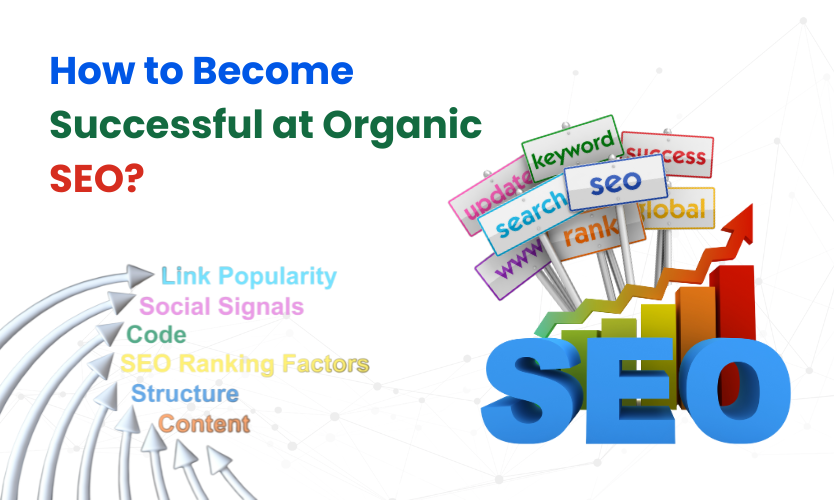
How to Become Successful at Organic SEO?

How to Become Successful at Organic SEO?

In this digital age, everyone wants to be seen. These businesses are putting in millions in ads. But good marketers know that organic SEO is where the real long-term potential lies. Unlike paid ads, where the results stop the moment your money stops being spent, organic SEO yields results for many years after work is put in.

But here is the hiccup: SEO is congested, competitive, and ever-changing. How do you really become successful in it? Let’s unlock the secrets of winning the organic SEO game creatively, strategically, and sustainably.

What Exactly Is Organic SEO?
Think of Google as a massive library. When a user searches for something, Google acts as the librarian pulling out the most relevant “books” (websites) to answer the question.

Organic SEO is the art and science of making sure your website is one of those books—right on the front shelf. Unlike a paid placement, your website cannot be purchased permission to exist there by Google-Kindly being rustic; rather, you earn that position by:

  • Creating valuable content
  • Optimizing technical performance
  • Building authority and trust

It’s like planting a seed that will grow into a forest of traffic over time.

Step 1: Start With People, Not Algorithms

Most businesses think only to optimize for a search engine. But here’s an interesting truth: Google does not buy your product; people do.

  • To win out in organic SEO, flip your thinking:
  • Who are your ideal readers/customers?
  • What problems are they searching to solve?
  • How can your content be the “aha!” moment for them?

Pro Tip: Use tools like Answer The Public or the “People Also Ask” section of Google to unearth real user questions and then craft content aimed precisely at solving their problems.

Step 2: Nail the Keyword Strategy (But Don’t Stuff It!)
Keywords act as road signs that tell search engines what your page is about. But there was an era of stuffing a blog post with a word frequently, say, around 20 times. Today, it is about targeting keywords based upon intent.

For example:

  • Instead of “best shoes” → target “best running shoes for flat feet in 2025.”
  • Instead of “SEO tips” → target “how to become successful at organic SEO without paid ads.”

Long-tail keywords are the ones worth focusing on; that is, they are very specific phrases. An advantage these have is they bring less competition; another is higher quality traffic.

Step 3: Optimize the Foundations (Your Website Matters)

Even the best content will not rank if the website is not user-friendly. Therefore, technicalities come first when it comes to organic SEO:

  • Page speed: Slow websites never win.
  • Mobile-friendliness: More or less 60% of the searches take place via cell phone.
  • Clean URLs: Keep such URLs short, descriptive, and keyword-rich.
  • Internal Linking: Would-be visitors shall enjoy a natural journey to related pages.

Think of your website as a house.  Fix it before you invite guests (traffic).

Step 4: Content Is the King, Queen, and Entire Kingdom

Content is king? It’s more than a cliché; let’s say it’s the very essence of organic SEO! Yet successful content for SEO undoubtedly goes beyond pulling a few articles together. Consider the usefulness, engagement, and uniqueness.

How to win:

  • Long-form blogs (1,500–2,500 words) that delve deeply into a topic.
  • Use storytelling to capture readers.
  • Give your content presence with visuals, infographics, and videos.
  • Keep updating the content; freshness is loved by Google.

Ask: Would I bookmark this page if I were the reader? If yes, you’re on the right track.

Step 5: Authority Through Backlinks

Google to this day counts backlinks as votes of confidence. The more trustworthy sites recommend you, the more you gain in terms of authority.

Creative ways to earn backlinks:

  • Writing guest posts for reputable websites.
  • Making infographics or research studies that people do want to share.
  • Form industry associations, for sometimes even simple collaborations can grow into links.

More importantly: A single backlink from a high-grade site is worth 50 from low-quality ones.

Step 6: Measure, Adjust, Repeat

SEO is not a “set it and forget it” kind of trade-it pulls in the continual effort. Some tools to be used are:

  • Google Analytics (to track traffic, bounce rates, and conversions)
  • Google Search Console (to check what keywords generate visitors to your site)
  • Ahrefs / SEMrush (to check out your competitors and see if you can rank there)

Success lies in tracking what is working for you, doing more of it, and fixing what is not.

Creative SEO Hacks to Stand Out

If you want to be more ambitious, go for:

  • Write ultimate guides → Content that others link to as a reference.
  • Leverage the FAQ section → Optimized answers tend to appear in Google’s featured snippets.
  • Present schema markup → Any rich snippets (stars, reviews, and prices) clearly boost click-through rates.
  • Voice Search Optimization → From Alexa/Siri, people ask Google questions differently (e.g., “What’s the best way to…?”).

The Big Picture: SEO Is a Marathon, Not a Sprint

Organic SEO success never comes overnight; rather, it is a process involving continued effort, a creative mind, and some patience. Every blog post, backlink, and technical fix is like a brick in the construction of your digital empire.

Remember how paid ads are renting visibility. Organic SEO is buying land that appreciates with time.

Final Thoughts
An organic SEO world’s little secret: it takes a strategy, some creativity, and a heap of persistence. First, get to know your audience, make content that solves certain problems, and finally, work on the trust level through optimization and authority.

The promise: through sheer will, a journey in organic SEO can generate not only traffic but loyal visitors, brand credibility, and long-term growth for the business.

Time to start showing some seeds into SEO. Come 1 year later, you’ll thank your past self for a vibrant presence of organic traffic on the website.

Categories
Website Design & Development

In what ways do Core Web Vitals impact the ranking of a website?

The Foundation of an Excellent Website: An Introduction to Google Core Web Vitals

In digital marketing and SEO (Search Engine Optimization); the user experience factors topmost. Core Web Vitals by Google represent metrics that determine the speed, stability, and user-friendliness of your website. These are not just technical terms but an interpretation of how users interact with your website. And, of course, they have become one of the crucial factors in ranking within a search engine.

Now let us discuss the three key components of Core Web Vitals that you can benefit from.

1. Largest Contentful Paint (LCP): Your First Impression

Think of LCP as the time your website takes for the full reveal. It records the time from the start of page load until the largest and most meaningful piece of content-or whether that is an image, or a video, or a block of text-is fully visible and ready for interaction. A good LCP score is fast, making visitors feel like they are not just waiting for the main attraction to show up.

How to improve your LCP score:

Unclutter the page: Large and high-resolution images, along with unnecessary elements, can slow things down. Optimize the images for the web to load them faster.

Invest in a better hosting: A web host with reliable and fast servers can cut nice load times for your pages.

Use on-demand loading: For example, lazy loading allows images and contents to load only when a user scrolls down to them, thereby improving the initial speed of page load.

2. First Input Delay (FID): The first interaction

FID measures exactly how much your website takes time to respond to the first user action, be it clicking a button or tapping a link. Having great FID means your site not only loads fast but is ready for usage immediately. Almost like a responsive feeling so users feel like they have control.

Actions that result in an FID typically include actions such as:

  • Tapping on any button or hyperlink
  • Filling any form field
  • Selecting an option from a menu or using a drop-down menu
  • Should your site react slow, the user angry sometimes would just leave the site, resulting in reduced ranking.
  1. Cumulative Layout Shift (CLS): The Stable Experience

Have you ever tried to click on something on a website, only for the whole page to shift unexpectedly and causing you to click on something else? That was a high CLS score in effect. CLS measures how visually stable your page is by tracking unexpected shifts in content. Keeping your layout stable helps avoid user frustration and lets the user have a smooth browsing experience.

Ideas for improving your CLS score:

Define image dimensions: Always specify the exact width and height in your code for any media element (images, videos) so the browser can reserve space for it before the asset loads.

Reserve ad space: Ads can appear at any moment, pushing your content down. Ensure you give a fixed ad space to prevent the content from shifting as ads load.

Tame your dynamic content: With pop-ups or dynamic content, be sure it isn’t making the rest of your page jump around.

Beyond the Vitals: Building an Excellent Quality Website

Core Web Vitals are but a piece of the whole puzzle. A Google ranking factor will also take into consideration some other user experience issues like:

Mobile friendliness: Your website has to be fully functional and user-friendly on any mobile device.

Safe browsing: It should be a secure website with HTTPS coming through on it, protecting the users and telling Google that the site is trustworthy.

No intrusive pop-ups: If your website is a disruptive full-pop-up or interstitial, it provides a bad user experience and might bring penalties on its search ranking.

When you work on Core Web Vitals and these basic principles, you do not really optimize for a search algorithm; instead, you are giving birth to a better website, more user-friendly, wherein people will actually want to visit and engage. Are you ready to get your site at the top?